


Submission successful
Cancel

Jul.19.2026
Back

On July 18, at the "Future Computing · Future Computing Power" special forum of the 2026 World Artificial Intelligence Conference, Lu Ben, CEO of Insight Space-Time, delivered a keynote report titled "Insight Space-Time, Spanning the Cosmos: AI Deep-Space Intelligence Ushers in a New Paradigm of Heaven-Earth Computing."
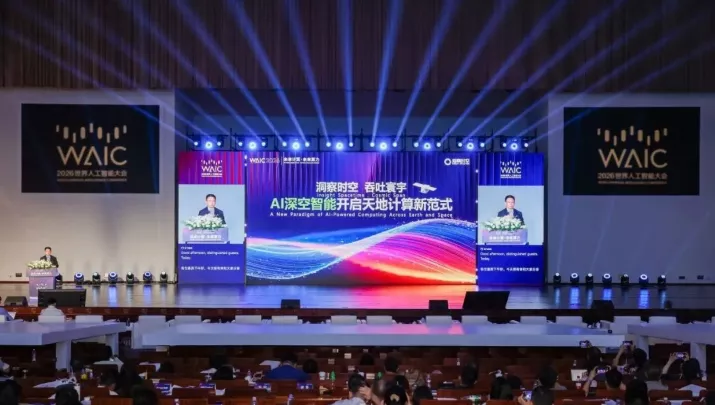
Forum Live
Selected Excerpts from the Presentation
Good afternoon, distinguished guests! It is a great honor to be here today to share Insight Space-Time's mission and vision, and to introduce you to our two core driving forces: the "AI Constellation with Integrated Computing and Sensing" and the Physical World Foundation Model.
What Is the Physical World Foundation Model?
To help you better understand the Physical World Foundation Model, let me begin with a comparison to something more familiar — the Large Language Model. What LLMs do is enable machines to learn how the human brain organizes, comprehends, and expresses information — they essentially replicate the capabilities of the human mind.
The Physical World Foundation Model, by contrast, is concerned with the objective laws that govern the physical world. By understanding these laws and the causal relationships they embody, we can project future states, interact more effectively with our environment, and ultimately reshape the world around us. At the planetary scale, through the acquisition of Earth's state-variable data and the extraction of spatiotemporal features, we gain deeper insight into physical principles and causal mechanisms — insights that can be applied across every domain of the Earth system, including transportation, mineral resources, and disaster response. Insight Space-Time's mission is to probe the underlying laws of the Earth-scale Physical World Foundation Model, helping humanity to foresee the future and transform the world.
Here, I would also like to share a key concept that runs through the entire history of engineering — automated closed-loop feedback. From the A/B testing of the early Internet, to AlphaGo's self-play that gave rise to AlphaZero — an agent surpassing the world's top human players — to the Auto-Coding that has recently enabled rapid iteration of large models, the common hallmark of all highly efficient intelligent systems is the establishment of an automated closed loop between prediction and reality, driving system evolution at maximum speed. This is precisely the essence of the current "Loop Engineering" movement.
The Distinctive "AI Constellation with Integrated Computing and Sensing"
To appreciate the importance of the AI Constellation with integrated computing and sensing to a large-scale Physical World Foundation Model, we must recognize that a low-Earth-orbit (LEO) or very-low-Earth-orbit (VLEO) satellite constellation should not be viewed merely as a tool for data collection and supply. Its far greater value lies in the closed-loop feedback mechanism formed by aligning AI-driven insights from the Physical World Foundation Model with actual geophysical observations. LEO and VLEO constellations can revisit the same region of Earth at exceptionally high frequencies, enabling rapid iteration of the Physical World Foundation Model — this is a critical feedback interface connecting AI to the physical world.
We are currently planning a constellation of 576 satellites in LEO and VLEO orbits, with an average orbital altitude of approximately 300 kilometers. Equipped with a rich array of payloads, this constellation will form a space-ground integrated, collaboratively computed, multi-modal heterogeneous data sensing network, comprehensively capturing dynamic variables across the globe. The first phase of the constellation comprises 168 satellites, with the goal of achieving wide-area initial networking and establishing the foundational space-based information sensing infrastructure. Within 2026, Insight Space-Time will complete the launch of its first two test satellites.
To build a more powerful integrated space-ground computing platform, we have drawn on proven engineering solutions from China's satellite internet constellation projects, establishing high-speed wireless laser links between satellites and between satellites and ground stations. This functions analogously to the high-speed optical networks that interconnect computing nodes in terrestrial IDC facilities — but with transmission distances extended from hundreds of meters within a data center to hundreds or even thousands of kilometers.
With this system in place, AI models both on-board and on the ground can interact dynamically, and large models deployed in orbit can undergo continuous online iteration and optimization. Leveraging high-frequency revisit capabilities and diverse observational payloads, the constellation forms a comprehensive system capable of collecting 200 petabytes of low-cost, high-frequency, multi-modal global observation data annually — laying a solid data foundation for the Physical World Foundation Model.
Let me help you visualize this more concretely through two specific use cases:
Typhoon Track Prediction: Traditional meteorological models tend to focus primarily on extracting numerical patterns. Insight Space-Time's Physical World Foundation Model, however, embeds atmospheric physics mechanisms deeply into its architecture. Validated against real-world data, the model demonstrates a clear advantage in landfall track prediction after integrating physical laws, showing remarkably close alignment with actual trajectories and outperforming conventional approaches in accuracy.
Dynamic Electricity Trading: Against the backdrop of China's recent introduction of dynamic electricity pricing, we have gone beyond renewable energy generation forecasting and grid load forecasting to incorporate trader behavior profiling and industry regulations into the foundation model. This enables the construction of a dynamic game-theoretic model under incomplete information, capable of effectively informing energy-related decision-making at the enterprise, industry, and even national levels.
In closing, I want to emphasize that Insight Space-Time is neither merely a constellation company nor merely a data provider. We are here to help individuals and organizations navigate uncertainty and make better decisions — to empower every person to perceive space and time, and to see into the future.
Prev
Typhoon "White Dolphin" Validation: StarQue Foundation Model Demonstrates High-Precision, Long-Lead CapabilitiesNext
Physical World Foundation Model Makes Its First Industry Debut in Energy Sector — Insight Space-Time Partners with WEnergy Group Industrial Research Institute to Launch "Anhui Energy Agent"Back
Newsroom
Last news

Insight Space-Time AI Research Accepted for Oral Presentation at KDD 2027, the Top International Conference on AI & Data Mining
Learn more
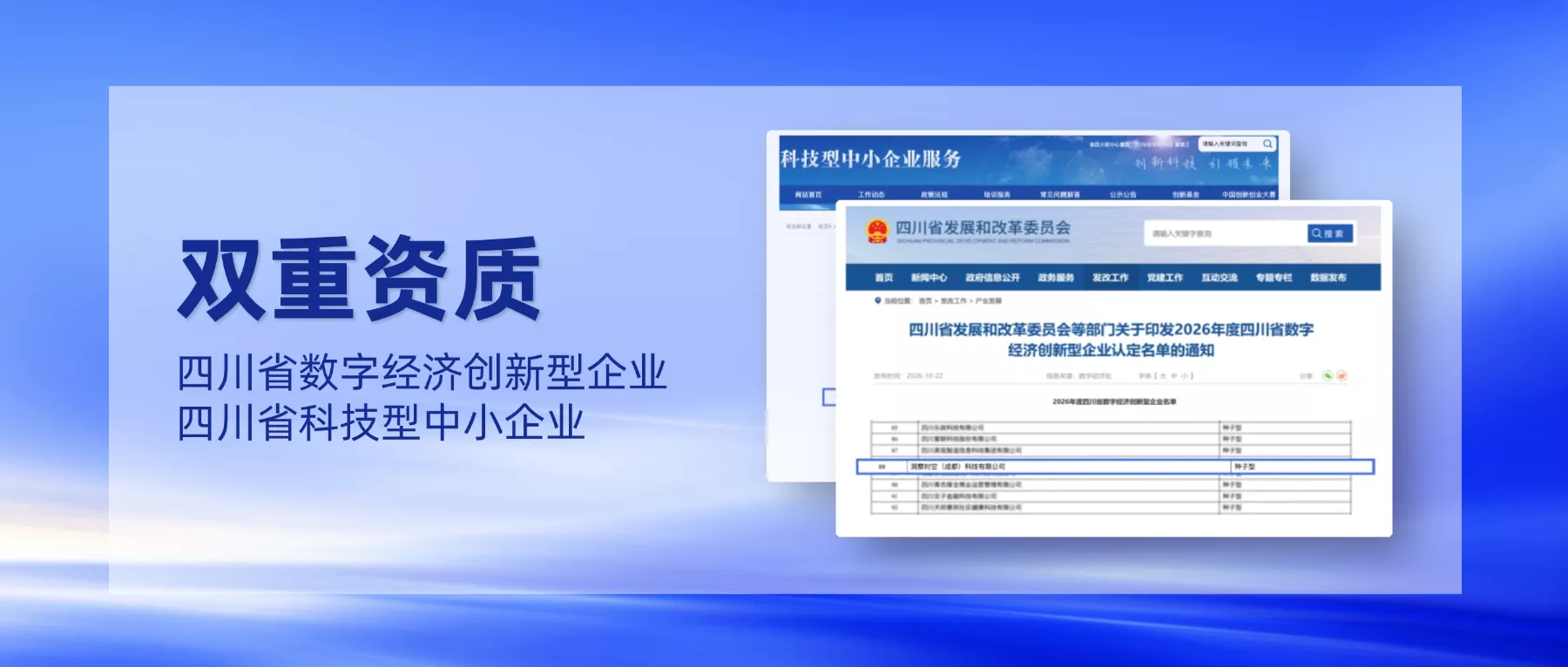
Strength and Potential Both Recognized by the Government: Insight Space-Time Named a Sichuan Digital Economy Innovative Enterprise and a Technology-Based SME
Learn more
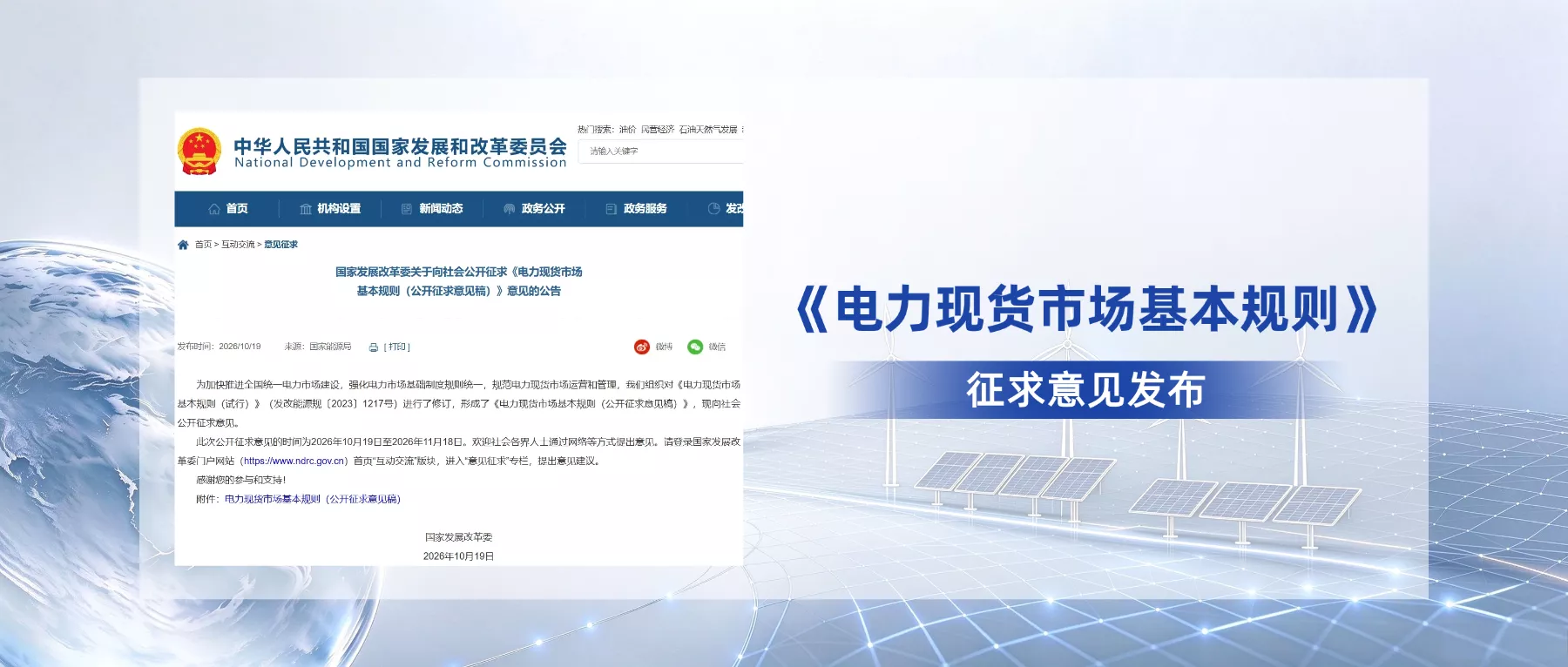
New Rules for the Electricity Spot Market Are Here: StarQue Foundation Model Helps the New Energy Power Industry Build Core Competitiveness
Learn more
Contact Us
Submit


© 2026 Insight Time-Space. All rights reserved. |
Privacy Policy