
Core Competitive Advantages

Core Advantages

Computational Efficiency

Computational Efficiency

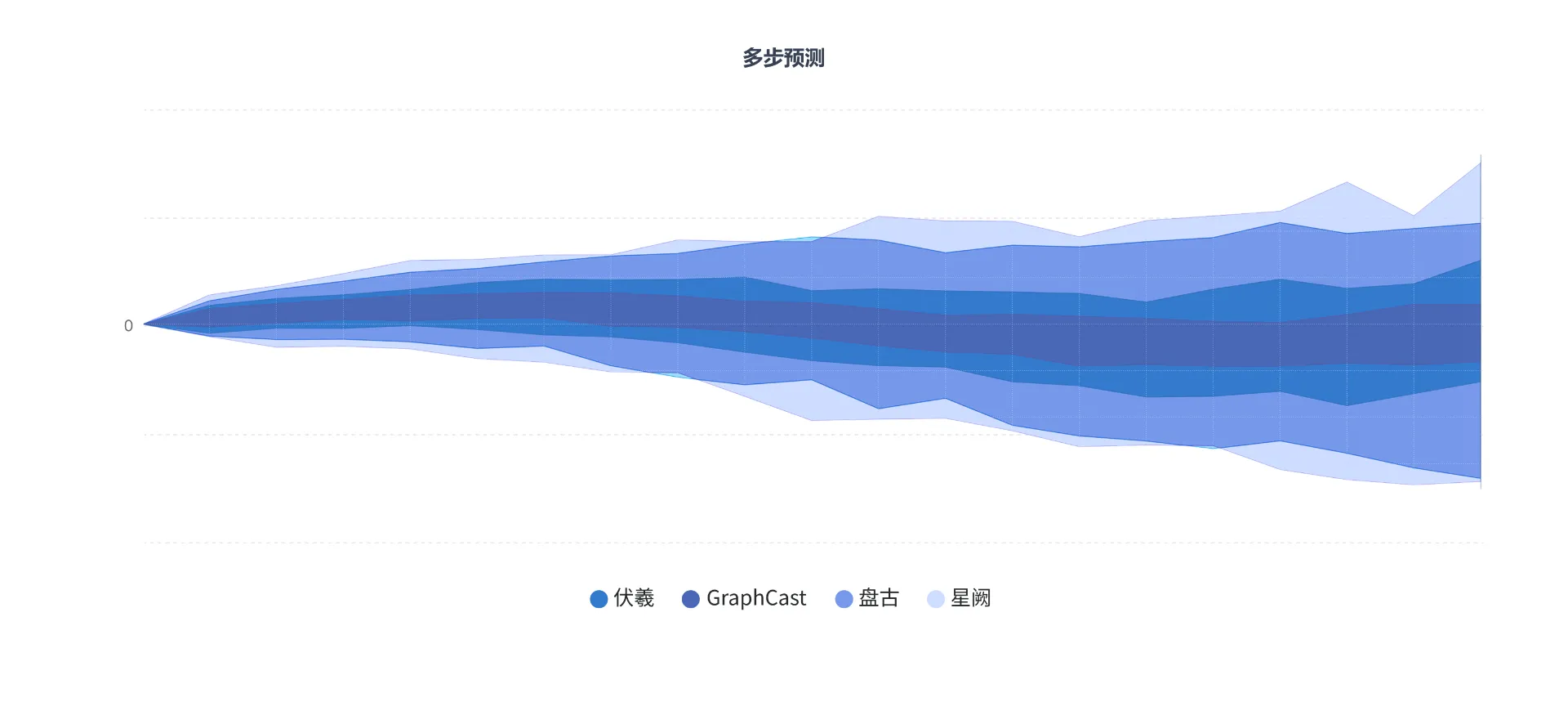
XINGQUE achieves global 24-hour forecasting in just 1.2 seconds, with only 13% parameter activation, significantly outperforming traditional dense models that require 100% activation. This results in faster inference speed and substantially lower computational cost.
MoE Architecture Innovation

MoE Architecture Innovation

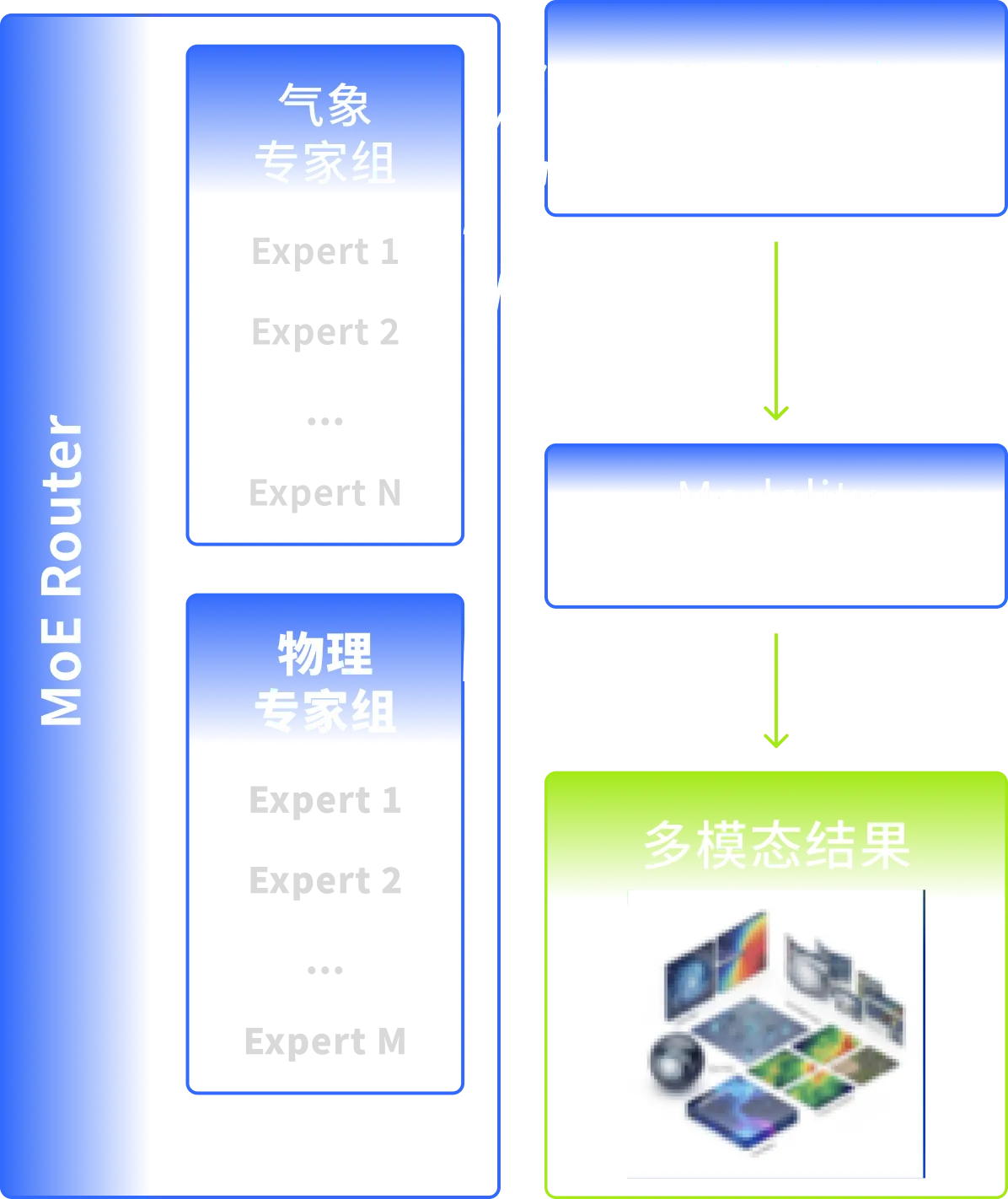
XINGQUE innovatively integrates a Mixture-of-Experts (MoE) architecture into meteorological forecasting.A gating network dynamically routes tasks to specialized expert modules, enabling precise modeling of short-term, long-term, and specific weather phenomena.
Core Advantages

Long-Term Forecasting Experts

Focus on forecasts beyond 7 days, leveraging stronger physical constraints and longer temporal modeling.

Short-Term Forecasting Experts

Specialize in 24–72 hour predictions with finer spatial resolution and faster inference.

Short-Term Forecasting Experts

Specialize in 24–72 hour predictions with finer spatial resolution and faster inference.

Product Features

Product Features

The core innovation of XINGQUE lies in integrating physical laws into the AI forecasting framework, building a multimodal meteorological processing system, and introducing causal reasoning mechanisms to enhance interpretability. Compared with existing meteorological models, XINGQUE achieves breakthroughs in the following areas:


Physics-Constrained Modeling
Applies a dedicated physical constraint layer to ensure predictions adhere to atmospheric physics, addressing the lack of physical consistency in conventional models.
Multimodal Processing
Treats each meteorological variable as an independent modality, leveraging single-modality feature extraction and cross-modality alignment to overcome limitations of traditional convolution-based approaches.
Ultra-Large-Scale Modeling
Models large-scale systems such as monsoon regions as independent modalities, enabling holistic modeling of the global climate system.
Causal Reasoning Mechanism
Introduces causal inference capabilities, allowing the model not only to predict outcomes but also to generate causal chains, significantly improving interpretability.

Model Architecture

模型架构

Training Data & Preprocessing

Training Data & Preprocessing

The model is trained on global meteorological data from 1979 to 2025, including: ERA5 from the European Centre for Medium-Range Weather Forecasts (ECMWF) and CRA-40 from the China Meteorological Administration. Datasets are split into Training Set (1979–2017) , Validation Set (2018–2021) and Test Set (2022–2025).


Data Standardization

Data Standardization

Normalizes meteorological variables to eliminate scale differences.
Spatial Interpolation

Spatial Interpolation

Applies bilinear interpolation to unify spatial resolution at 0.25° × 0.25°.
MV-EOF Analysis

MV-EOF Analysis

Extracts dominant modes for large-scale systems (e.g., monsoon regions).

Applications

Applications

New Energy Operations

Optimizes cross-cycle scheduling, generating tens of millions in additional annual power revenue.

Regional Airport Aviation Services

Deployment completed within 2 months, reducing tens of millions in operational costs.

Logistics Networks

Saves tens of millions annually in delay and cargo loss costs.

Contact Us

Every communication is a fusion of data and wisdom.
Leave your contact information, and let us unlock exclusive insights for you.

Submit

Submission successful
Cancel