


Submission successful
Cancel

Sep.28.2026
Back

At the "Agent Native Infra — Production-Grade Practical Deployment and Analysis of Intelligent Agents and Large Model Training/Inference" sub-forum of the 2026 Yunqi Conference, Shen Jian, Vice President and Head of Platform Technology at Insight Space-Time, delivered a presentation titled "Spatiotemporal Intelligence Infra: Building an Integrated 'Sense–Compute–Decide' Technology Architecture," systematically sharing the company's technology architecture design and engineering practices in the field of spatiotemporal intelligence.
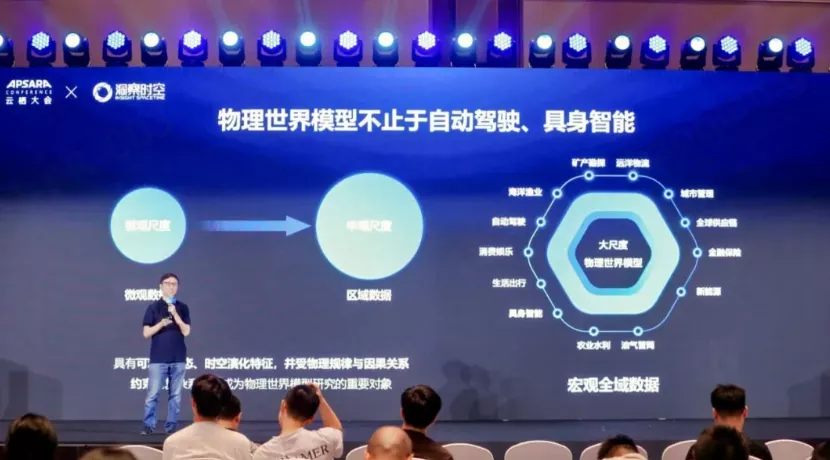
Forum Live
Selected Excerpts from the Presentation
Building on the Physical World Foundation Model as a foundational model system, Insight Space-Time aims to develop a series of relatively large-scale, near-real-time models oriented toward land, atmosphere, ocean, and human activity — serving every sector of society. To support such large-scale Physical World models, the core requirement is to connect the entire chain — "observation, data acquisition, data processing, AI analysis, business decision-making, and result validation" — into an integrated "Sense–Compute–Decide" closed loop.
01
At the infrastructure layer, confronted with the engineering challenges of large model training, we have drawn on our own satellite and spatiotemporal intelligence business requirements to build a technology stack based on cloud service providers' foundational product suites — unifying heterogeneous infrastructure at the bottom and delivering standardized AI engineering capabilities at the top, thereby linking dispersed R&D, computing power, and operations into a complete AI engineering workflow and achieving efficient synergy among the three.
Leveraging this technology stack, we have unified previously fragmented capabilities, achieving integrated satellite scheduling and spatial analysis, pipelined data processing and AI training/inference, and a data closed loop from prediction and decision-making through to result validation.
02
At the data layer, we have built a spatiotemporal data lake with physical associations, unifying data scattered across different sources, formats, and temporal and spatial scales. We have established a unified data model system that connects previously isolated data by defining data domains, entity objects, associative relationships, constraint rules, and analytical dimensions — achieving alignment across time and space and forming a structured representation of the real world and its operational relationships.
Building on this, we have further developed a data extraction center oriented toward business concepts and natural objects, organizing underlying data into objects, attributes, relationships, and their time-varying features. This enables AI to no longer merely "see data," but to understand objects' state changes, evolutionary processes, and their interrelationships — advancing toward a genuine comprehension of the real world.
03
At the platform layer, we have constructed a multi-platform collaborative system spanning from satellite data to AI prediction, covering space-based platforms, ground receiving and task platforms, cloud-based data and AI platforms, and application and validation platforms — ultimately addressing three key challenges:
The first is real-time operation. We shorten the pipeline from satellite acquisition and data processing to AI output. The more timely the results and the earlier the predictions, the greater the business value.
The second is closed-loop operation. We enable model outputs to be continuously validated and corrected by the real world, shortening the feedback cycle from validation to problem discovery and model optimization.
The third is intelligent observation scheduling. Models and data analysis not only consume satellite data — they can also answer the question in reverse: "What should be observed next, where should observation focus, when should observation occur, and how should it be conducted?" This forms a genuine linkage between AI and satellite missions, accelerating the continuous evolution of the entire model.
At present, this technology architecture has been validated to a certain extent in practical operations:
In the meteorological domain, during the landfall of Typhoon "White Dolphin" (the 13th typhoon of this year), the Insight Space-Time StarQue Foundation Model demonstrated systematic advantages across two core dimensions: medium-to-long-term typhoon track projection and advanced precipitation prediction.
In the energy domain, Insight Space-Time is building an integrated forecasting system for renewable energy power prediction and the electricity spot market, providing ultra-short-term, short-term, and medium-term high-precision forecasting capabilities to meet the integration needs of various renewable energy forecasting and power products.
In closing, I want to emphasize that spatiotemporal intelligence is a vast systems engineering endeavor that requires collaboration across the entire industrial chain. Insight Space-Time hopes to work with all parties to build an open, shared, and innovative spatiotemporal intelligence industry ecosystem — jointly advancing AI's journey from the digital world into the real physical world.
Newsroom
Last news

Insight Space-Time AI Research Accepted for Oral Presentation at KDD 2027, the Top International Conference on AI & Data Mining
Learn more
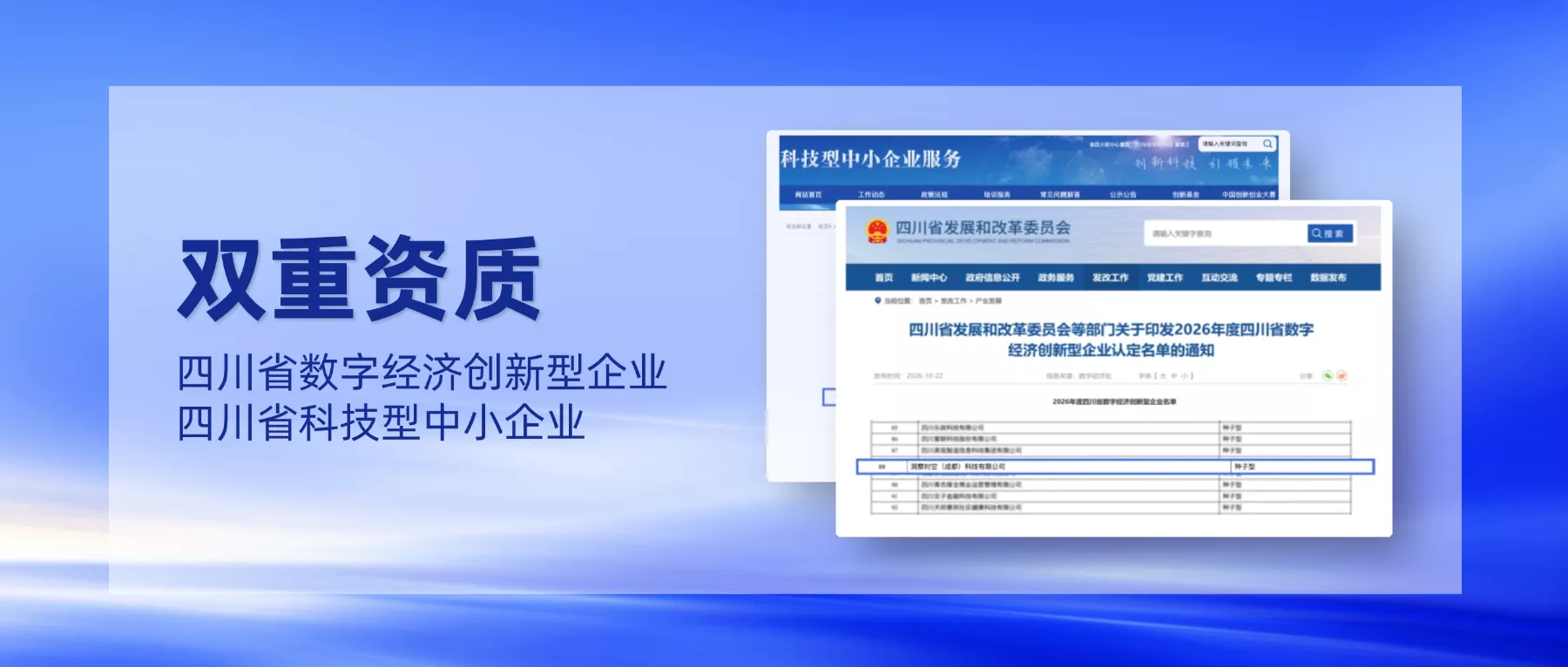
Strength and Potential Both Recognized by the Government: Insight Space-Time Named a Sichuan Digital Economy Innovative Enterprise and a Technology-Based SME
Learn more
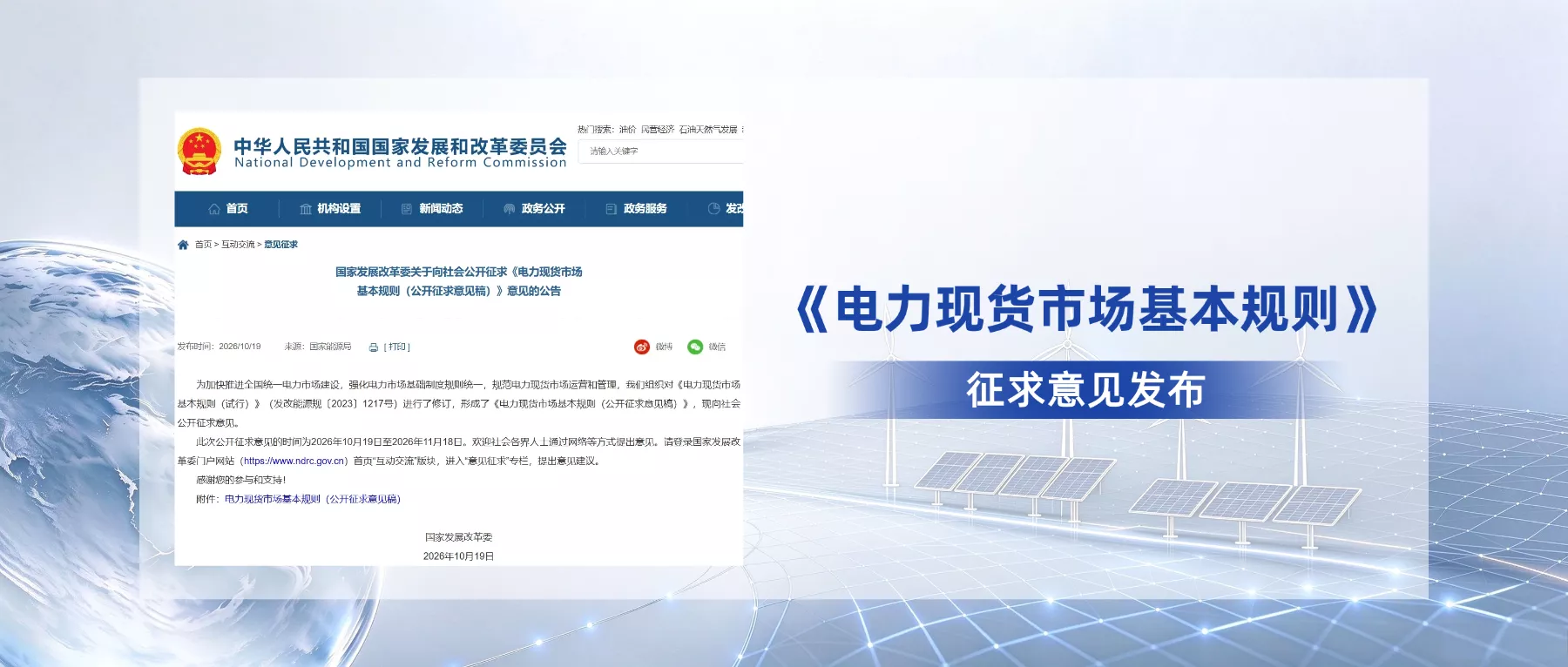
New Rules for the Electricity Spot Market Are Here: StarQue Foundation Model Helps the New Energy Power Industry Build Core Competitiveness
Learn more
Contact Us
Submit


© 2026 Insight Time-Space. All rights reserved. |
Privacy Policy